AI & HR
AI Assessment and Development Centres in 2026: Hire, Promote and Grow on Your Own Competencies
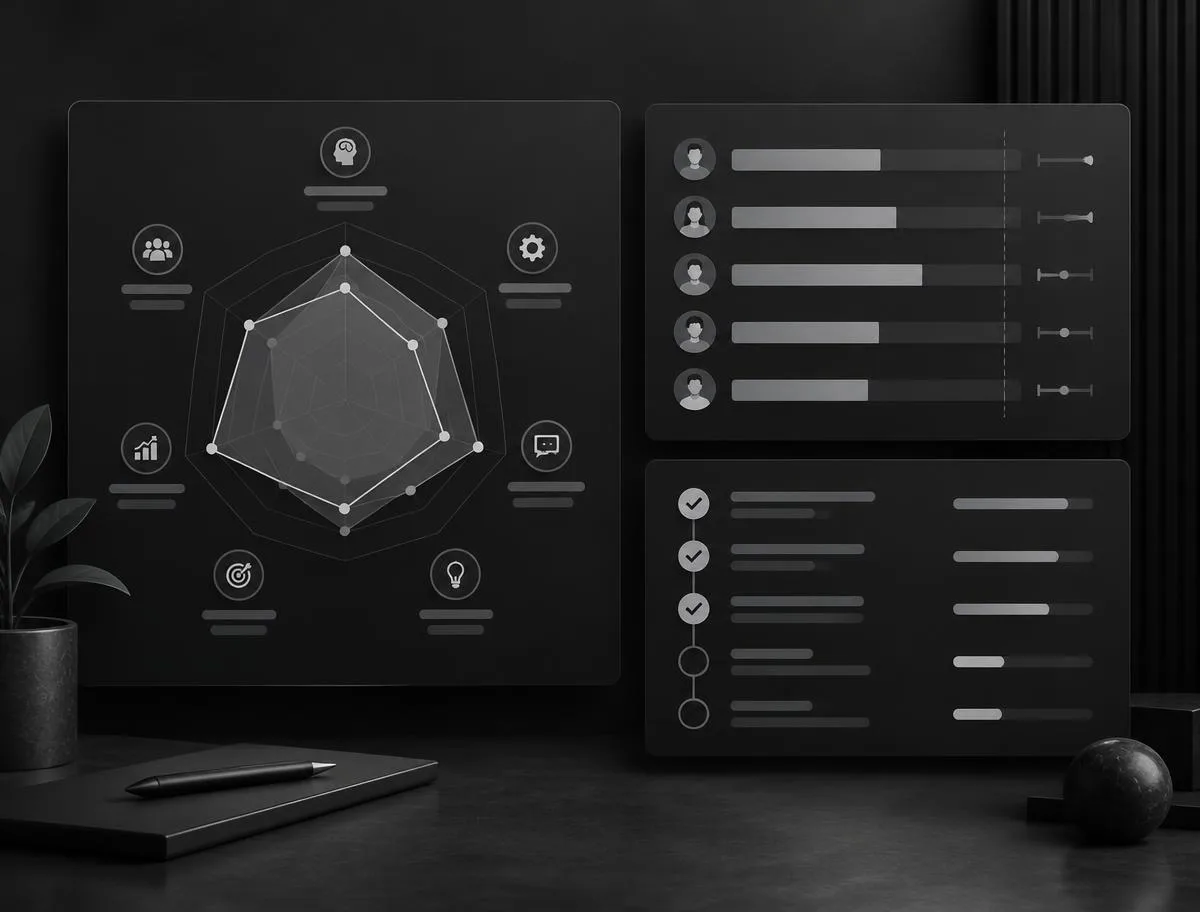
Are your people decisions based on evidence or gut feel?
Every HR head makes the same calls across the employee lifecycle. Are we hiring the right person? Is this the right person for this role? Who's ready to become a manager? Who should be promoted, and who needs more development first?
Too often, those calls rest on an interview, an appraisal rating and a manager's opinion. These mostly measure what people know or what they did in the past. They don't show how someone actually behaves when a real work situation lands on their desk. An AI assessment and development centre can now show that, at scale.
And the competencies you need are moving. The World Economic Forum's Future of Jobs Report 2025 says nearly 40% of the skills needed on the job will change by 2030. It also found that 63% of employers see skills gaps as the main barrier to transforming their business.
Why do so many organisations struggle to place the right people?
In 2022, Deloitte surveyed 125 HR and 100 business executives across 10 countries. It found:
In our view at Breakfree, the problem isn't a shortage of talent. It's a shortage of reliable evidence about how people actually work.
- Only 18% strongly agree their workforce uses its skills to the full.
- Fewer than half say they can quickly move skills to where they're needed.
- Only 17% say their organisation values demonstrated skills and potential over degrees and experience.
What's wrong with traditional assessment centres?
Assessment and development centres (ADCs) are the gold standard. Trained assessors watch people handle realistic work situations. They rate what they see using Behaviourally Anchored Rating Scales (BARS), which are clear descriptions of what weak, good and excellent behaviour looks like for each competency.
This approach works. But in practice:
We've seen what this leads to. Strong people get overlooked because they didn't "test well". Others get promoted into roles they weren't ready for.
- It's expensive. Trained assessors, role-plays and full days away from work all add up.
- So only a few people get assessed. Usually that's a small group of senior leaders. Most employees never get this level of insight.
- It's a one-off. You get a snapshot on one day, then nothing until the next cycle.
- Development often stops at the report. The feedback gets filed, and the gaps stay open.
What is Skill-Insight-AI?
Skill-Insight-AI is Breakfree's AI-powered assessment and development centre. It brings ADC-level behavioural insight to the whole workforce, not just a few senior leaders.
It assesses new and existing employees against your own competency framework, then helps develop them on the gaps it finds. It's built on four ideas:
Our idea behind it is simple: turn knowledge into capability, and make capability visible.
- AI workplace simulations. Instead of answering test questions, people respond to realistic situations they'll face in the role.
- BARS behavioural scoring. Responses are scored with behaviourally anchored rating scales, the same method trained assessors use. That means observable behaviour, not opinions, which helps reduce bias.
- Readiness vs Application. It measures both what people know and what they actually do.
- A score plus a clear fix. It shows what to improve, and how.
What is Readiness vs Application?
Many people know what good leadership looks like. They can describe how to handle a difficult conversation or a missed deadline. But knowing isn't the same as doing.
Most tests only measure readiness. Skill-Insight-AI measures both, and the gap between them. That gap tells you more than either score alone. Someone who knows the theory but struggles to apply it doesn't need another course. They need practice and coaching.
- Readiness is what someone knows: their understanding of what good looks like.
- Application is what they actually do when the situation demands it, often under pressure.
How does Skill-Insight-AI help people improve?
Most assessments end with a score or a report. Managers are left asking, "So what do we do now?"
We took our cue from website tools like Rank Math. They don't just score your page; they list exactly what to fix. Skill-Insight-AI does the same for capability. It shows:
So the assessment becomes the start of development, not the end of it.
- Where the gap is
- What needs to improve
- How to improve it, through structured, bite-sized learning
How is it different from other assessment methods?
The distinction is not simply whether an assessment happens online. It is the evidence it captures, the competencies it uses and what happens next.
| Traditional ADC | Typical online tests | Skill-Insight-AI | |
|---|---|---|---|
| How people are assessed | Live simulations with human assessors | Tests and surveys | AI workplace simulations |
| What it measures | Behaviour | Knowledge and intent | Behaviour, plus Readiness vs Application |
| Scoring | BARS, by trained assessors | Generic scores | BARS-based behavioural scoring |
| Competencies | Often a generic library | Often a generic library | Your organisation’s own competencies |
| Who gets assessed | A few senior leaders | Many people, but not in depth | New and existing employees, across the workforce |
| What happens after | A report | A score | The gaps, what to improve and how |
Where can HR use it across the employee lifecycle?
Because everyone is assessed on the same competencies, one system supports every big people decision:
- Right hire. Assess candidates on how they'd handle the real job, not just their CV and interview.
- Right role. Check fit before moving someone into a new role.
- Right promotion. Check leadership readiness before someone steps up, so the move is fair and backed by evidence.
- Right succession. See who's ready now, who's ready in a year, and what each person needs to get there.
- Right development. Turn each person's gaps into a focused growth plan, instead of generic training.
Where should people stay in charge?
AI brings scale and consistency. It can assess more people, more often, against the same standard.
People should still own the decisions. A manager's judgement, a conversation with the employee and HR's sense of fairness all matter. In our view, an AI assessment should inform a hiring or promotion decision, never make it alone.
Why did we build it?
For over 10 years, Breakfree Consulting has designed and run leadership development and assessment programmes for large organisations. Along the way, we've used many of the assessment platforms in this space.
We kept seeing the same thing. The deepest insight always came from watching people handle real situations, but that method didn't scale. Skill-Insight-AI is our answer to that.
How do you get started?
Start with a focused, practical approach.
- Pick one decision that matters now. That could be a promotion round, a campus hire or a succession list.
- Bring your competency framework. If you don't have one, start with 6–8 competencies for that role.
- Run a pilot assessment with one group.
- Compare the results with how you'd have decided before.
- Expand to more roles once leaders trust what they see.
What is an AI assessment and development centre?
It assesses people against a set of competencies, using AI-driven work simulations and behavioural scoring. Then it builds a development plan on the gaps. Skill-Insight-AI is Breakfree's version.
What are Behaviourally Anchored Rating Scales (BARS)?
BARS describe what weak, good and excellent behaviour looks like for each competency. Assessors, or AI, score what a person does against those descriptions, rather than relying on opinion.
What is Readiness vs Application?
Readiness is what someone knows about doing a task well. Application is what they actually do in a real situation. The gap between the two shows where development is needed.
Can AI assessment be used for hiring and promotion?
Yes. Candidates and employees are assessed on the same competencies, so the results can support hiring, role fit, promotion and succession. People should still make the final call.
Do we need a competency framework first?
It helps. If you don't have one, start with 6–8 competencies for one role.
Checklist: are you ready for AI-powered assessment?
If you ticked fewer than four, that's normal. It's also exactly where Skill-Insight-AI helps.
- We have a competency framework, or know the 6–8 competencies that matter most
- We assess how people behave, not just what they know
- Our hiring, promotion and succession decisions use evidence, not just ratings
- Deep assessment isn't limited to a senior shortlist
- Every assessment leads to a clear development plan
- Managers stay part of the final decision
- We have a clear stance on AI and employee data
Start with one people decision
Have a promotion round or succession plan coming up? Talk to Breakfree about assessing one role against your own competencies and turning the findings into focused development.
Sources
World Economic Forum, Future of Jobs Report 2025; Deloitte, The skills-based organization (2022).
Want this working in your organisation?
Talk to us about how this product could support your team.
Start a conversation